Controlling Sickness
(and every other aspect of American life)

What we are doing is returning individual autonomy to the first order—not public health, but individual autonomy to the first order.
So promised Dr. Kirk Milhoan, the pediatric cardiologist who now serves as chair of the Advisory Committee on Immunization Practices in the current administration.
Dr. Milhoan, an RFK Jr. appointee, was explaining on the “Why Should I Trust You?” podcast that preserving every patient’s right to refuse vaccination is the highest priority of his committee.
(Not, just to be clear, actual public health.)
Yes, Dr. Milhoan admitted, it was possible that an unvaccinated child might die of measles, or be paralyzed by polio, and that would be sad. However, he adds, ‘I also am saddened when people die of alcoholic diseases.’”
Measles, polio, alcoholic cirrhosis, and individual autonomy: what do those four things have in common?
In the MAHA universe, it’s simple. They all point to personal responsibility— because in the MAHA world, disease is almost entirely a matter of exercising that responsibility badly.
In the same interview, Dr. Milhoan suggested that measles is preventable because “we take care of children much differently now,” and that polio is no longer a threat because “our sanitation is different.” This is entirely in line with his boss’s stance that diseases are caused by careless nutrition, unclean living, self-indulgence, thoughtless parenting, and bad choices made for you by others; for example, authorities who insist on necessary vaccinations against your wishes. (Lack of exercise, overuse of cell phones, and resorting to painkillers also play starring roles.)
In a century when germ theory has been accepted by 99.9% of reputable scientists and thinkers, why this insistence on clean living and the exercise of personal freedom as the lodestar of good health?
Simple. Control.
Whether we like it or not, disease takes away our control over our lives. Whether we like it or not, we get sick. But the denial of this very basic fact is front and center in the MAHA universe. We can guarantee that we will live better by eating more beef and whole milk, by making all the right choices, by controlling our environments. Those who control will be rewarded with long life and health. Those who give up control because of lack of discipline, laziness, self-indulgence, or submitting to authoritarian decrees will get sicker.
The MAHA universe is an idealized fever dream. In the actual world, contagious disease is the place where the MAHA ideal meets the rubber of the real world—which is why RFK’s administration is so resistant to vaccines. Vaccines admit that there are things that we cannot control with good food, good sanitation, and good habits. Vaccines take control away from us and place it in the hands of someone else—in this case, those who are issuing the vaccine recommendations.
In this, the MAHA movement is simply following the exact same trajectory as MAGA itself. Think how much exercise of control we have seen from the present administration. Our narrative about the past of this country must be strictly controlled. Controversial opinions must be shut down, either with threats or with lawsuits. Immigrants must be controlled. By any means, even the most violent, protestors most definitely must be controlled.
Control is the central virtue in the MAGA world, and that control starts with our own bodies.
There’s an obvious paradox here, which is that all that control in the name of restoring freedoms constantly violates the freedom of others. (Control is almost always a beast that swallows itself.)
In the medical field, the contradiction is equally striking. Choosing not to vaccinate constricts the freedom of those who cannot be vaccinated, of course; infants and anyone with compromised immunity can no longer go freely out into the world without fear of infection.
But even more paradoxically, vaccines are one of the areas in which we do actually exert massive control over the natural world.
In 1977, the last naturally occurring case of smallpox was recorded in Somalia. Smallpox, arguably the most dreaded disease in our past, killed hundreds of millions of children, women, and men. It began with a sudden hot fever and crippling headache. Two or three days later, the dreaded rash started to erupt, pustules filled with fluid and hard at the center, like a scattering of buckshot under the skin. “That forehead,” writes C. S. Forester, as his Napoleonic War hero Horatio Hornblower lays his hand on his feverish son, “it felt strange; like small shot felt through velvet.” For the more fortunate, the pustules scabbed over and eventually healed, leaving disfiguring scars and often blindness behind.
But three out of ten sufferers died from pneumonia, from encephalitis, from gangrene caused by hemorrhage under the skin or into the stomach and intestines.
Decades of intensive vaccination led, in 1980, to the announcement that smallpox was no longer active in the human race. We had done something unprecedented: the eradication of an entire disease. It was one of the greatest scientific—and one of the greatest human—triumphs in our history.
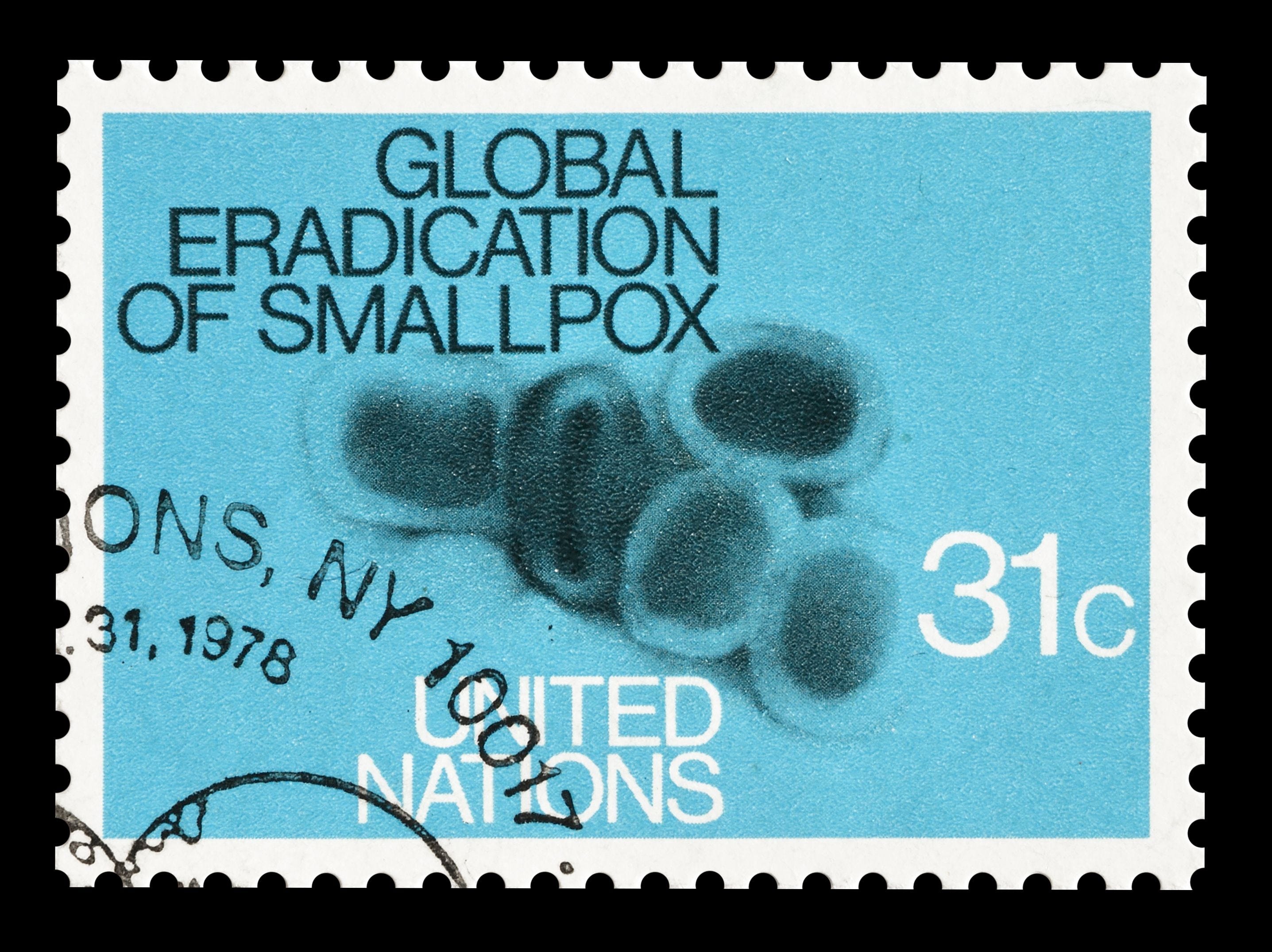
In our current administration, that triumph is unlikely to be repeated.
In fact, Dr. Milhoan’s back-peddling on vaccines and his exaltation of factors within individual control is going to have the opposite effect. Measles cases are already skyrocketing, good nutrition and scrubbed hands notwithstanding.
Will polio be far behind?