Raw Milk, Part Two
More Work for Mother

If you haven’t read Part One, have a quick look now.
And take a moment to appreciate just how many of those anecdotes about the value of raw milk have to do with children becoming healthier. Remember the response of Ladies’ Home Journal to the 1929 article “Before You Drink A Glass of Milk”: “Here was a story in the Journal with enormous circulation which said to the mothers that milk is a fine food but be sure it is pasteurized because they may get a bad fever if it has this germ in it.”
Said to the mothers.
So let’s talk about the mothers. And let’s widen our focus out from raw milk, towards the larger question of what exactly those forty hours of nutrition that the MAHA administration is pushing are going to contain.
And, more to the point, who’s going to shoulder the burden of providing it.
History gives us a hint.
One of the lasting results of early germ theory was the shifting of the primary responsibility for keeping the home and everyone in it healthy from physicians over to women. In the absence of any useful treatments for germ-caused diseases, prevention was the only recourse—and women were in the front lines of that prevention, the lookouts practicing the eternal diligence that would keep innocent lives safe. “Women,” decreed Mrs. H. M. Plunkett in her 1885 tome Women, Plumbers, and Doctors, or, Household Sanitation, “are more interested in preventive medicine and household hygiene than men,” because it is their “destiny…to remain a large share of the time at home.”
Wives and mothers were expected to monitor all of the ways in which germs could spread to their families: food, furnishings, dust (thought to be a major repository of germs). Vacuum cleaners sold in record numbers, as a way to make sure that dust-borne threats were dealt with. As an ad for the Ideal Vacuum Cleaner puts it in 1909, “It is absurd to think that a house is clean because it gives no visible signs of dirt.” In these newly germ-conscious days, the “most thorough possible cleanliness every day…is the new standard for house.” Only the Ideal Vacuum Cleaner can rid the home of “decomposing and putrid atoms and the germs of disease.” Without unceasing attention, effort, and study, the housewife might open up her family to catastrophe.
And there was a heavy moral shading to this responsibility. “Only those who can appreciate the value of cleanliness,” wrote Ellen Swallow Richards,
can come to feel the interest and delight of the daily routine…The cleaning of the brasses, the washing of the windows [is] a fine action, a sort of religion, a step in the conquering of evil, for dirt is sin…What must be [the housewife’s] aim is the health and happiness of those in her care, for happiness means health. Dirt means disease, therefore the warfare with dirt is incessant.
Richards, the first female student at MIT and a chemistry graduate of Vassar, taught “sanitary chemistry” (the examination of water, air and earth for any causes of disease) at the university level, and turned her professional obsession into the brand-new field of “domestic science,” or home economics—a field essentially created by the necessity of responding to germ theory. A staunch feminist, she believed that women should be at the forefront of this new study:
[W]ho is to have the knowledge and wisdom and time and to carry out the ideals and keep the family up to these standards. Who, indeed, but the woman, the mistress of the home, the one who chooses the household as her profession, not because she can have no other…but because she believes in the home as the means of educating and perfecting the ideal human being…Let [a woman] acquire…knowledge of and respect for science and the laws of nature…and she will come into her kingdom.
Richards saw this responsibility as power-giving and life-granting—but there was a sting in the tail of the promise. This kingdom came, as Plunkett wrote, with the “divinely appointed mission” to keep the home clean and safe. And that mission came with a massive helping of guilt. “There is nothing in hygiene that [a woman] can not comprehend,” she insisted, “and too often does she realize this and begin to study it, when, too late, she stands beside the still form of some precious one, slain by some one of those preventable diseases that, in the coming sanitary millennium, will be reckoned akin to murders. Eternal vigilance is the price of everything worth the having or the keeping.”
In this newly terrifying world, that vigilance was primarily assigned to women.
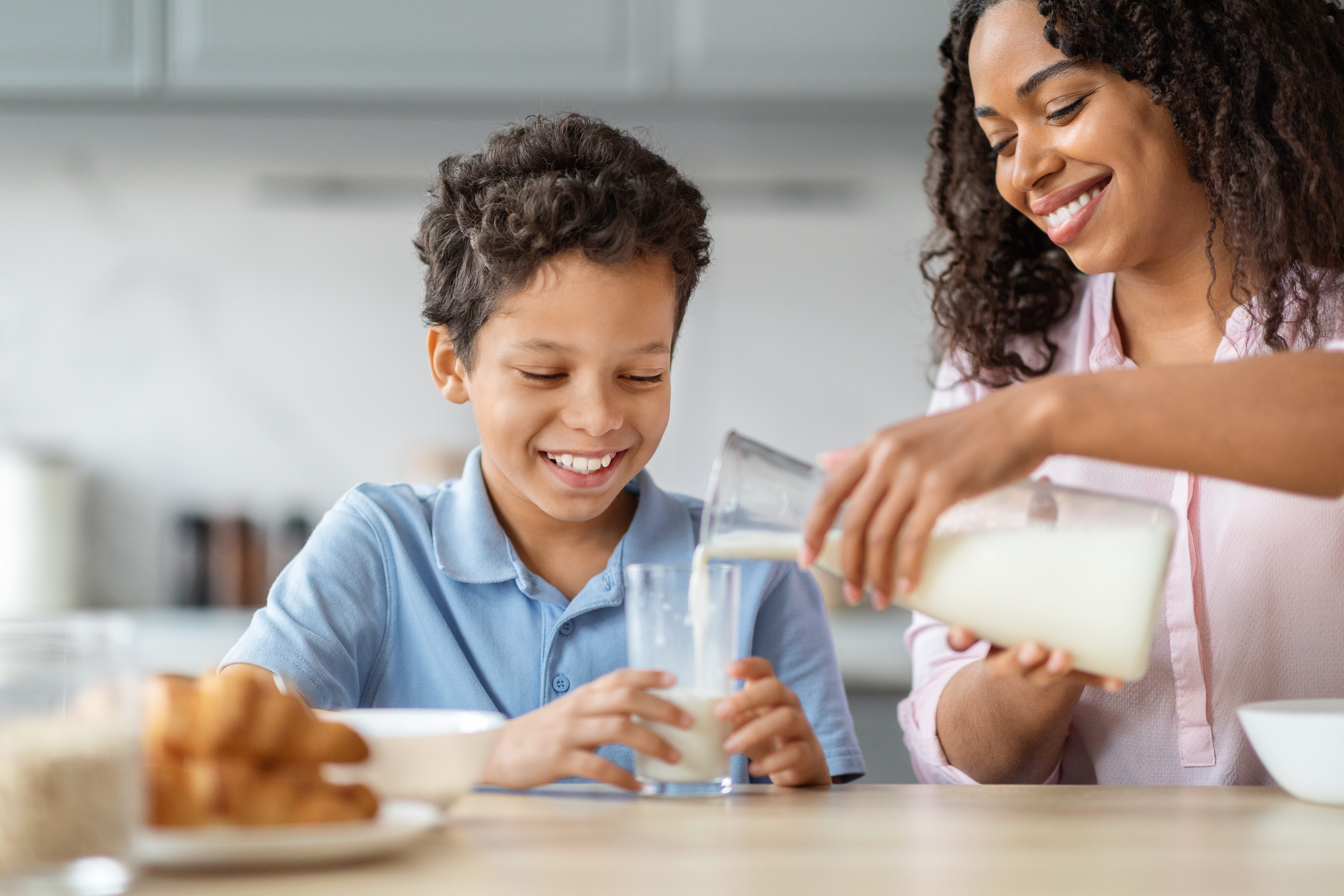
When I was a young mother, a still younger mother who lived nearby was on a constant quest for farms that would sell her raw milk for her three young children. Her two-year-old had been joined by twins, delivered by necessary C-section, and I still remember the reaction that her mother had to the surgery, as I was delivering the neighborly meal-for-new-mom: “She just didn’t have that motherly glow,” the grandmother said, sadly. “She was so deflated, so tired. So different from her first delivery. I felt so sad for them all.”
Not, notice, “I have two more healthy grandchildren.” This family reaction explains a lot about the young mom’s quest for the absolutely best experience for her children. Finding raw milk was an expression of her worth as a mom—particularly since she hadn’t managed to fulfill her first best task, of providing the perfect birth experience for her new babies.
Let’s revisit a few of the rawmilk.com and realmilk.com anecdotal claims about the values of nonpasteurized milk (none of them verified by studies).
Children fed raw milk have more resistance to TB, scurvy, flu, diphtheria, pneumonia, asthma, allergic skin problems and tooth decay. In addition, their growth and calcium absorption was superior.
[A]n autistic eight-year-old boy…had not spoken a word since the sudden onset of autism at the age of two. After two months on raw cow’s milk, all autistic behavior disappeared and the child began to babble as a prelude to speech. The only dietary or treatment change was a switch from pasteurized to raw milk. Imagine the joy and relief that raw milk has given to these children, and the families of these children—an end to suffering, an end to worry. Family life can be peaceful and happy again, and the child now has the possibilities of a normal life.
Thousands and thousands of mothers have discovered that raw milk is the one food that allows them to give a sigh of relief, a food that helps their children grow normally, puts color in their cheeks, calms their behavior, gives them energy and focus, protects them against infection, cures allergies and asthma, and offers them the promise of a normal life. We call these passionate moms, and passionate moms are the strongest force on earth…raw milk is a miraculous food, and there is a host of passionate moms out there who are determined to get it for their families, whether you like it or not.
The subtext isn’t difficult. In fact, it’s not even subtext. Passionate moms want raw milk. If you don’t want raw milk, you may be a mom, but you’re not a passionate mom.
For raw milk, sub in any of the nutrition priorities of the MAHA movement. Those forty hours of nutrition might be taught to medical students, but the weight of putting the recommendations into practice will land directly on the shoulders of parents. And they will struggle to bear that burden.
Physician Leanna Wen eloquently described the problem here, when she writes:
[P]erhaps Kennedy should have asked why nutrition has not already been a central part of medical education. It is not because physicians don’t want to learn about healthy food; rather, it is because knowing the science is only the beginning. The much harder task is helping patients act on that advice and overcome the practical barriers to healthy eating… if the Trump administration truly wants to prioritize healthy eating, it should reconsider policies that make it harder for people to afford food. Its dramatic cuts to the Supplemental Nutrition Assistance Program, which helps low-income families pay for groceries, will leave more families struggling to put food on the table. At the same time, halting the government’s annual survey on food insecurity only makes the problem harder to see and address. When people are hungry, even the best nutrition education in the world will not help them become healthier.
Wen’s response to the nutrition initiative isn’t gendered, but it should be. With all respect to my male readers, supervising your own nutrition is a human responsibility, but supervising the nutrition of children is (like dusting and window-washing, a hundred years ago) overwhelmingly the domain of mothers.
Nutritional education for doctors, uncoupled from any actual practical guidance on how to get that nutrition from farm or store to kitchen, will only deepen the guilt of mothers—who, in my experience, already feel some constant level of guilt about their maternal performance anyway.
Does RFK Jr. have a strategy to deal with that?
Postscript: One of my readers sent along a number of food safety links about illnesses caused by raw milk, and I’ve added a few of them below. It’s worth noting that the anecdotes about raw milk’s virtues are easily matched by the anecdotes about devastating injections carried by raw milk. Playing “match that anecdote” is not a way out of this argument, but I would certainly encourage my readers to investigate further.
Leanna Wen, “The glaring problem with RFK Jr.’s push for more nutrition education.”
Actually, moms used to boil milk themselves
The current FDA take on raw milk consumption
“Medical schools pledge changes as RFK Jr. urges training in nutrition”
Thank you, always appreciate your challenging insight! As a recovering crunchy mom, I’m getting some perspective. On vaccines.. on raw foods… there’s got to be sensibleness in the middle right?